

High-Precision Grinding Technology: The Key to Machining Precision Hardware Components
Release date:
2023-07-07
High-precision grinding is a critical technology in the machining of precision metal components. This paper outlines the principles of high-precision grinding and its applications in component manufacturing, highlighting its importance for dimensional accuracy, surface quality, and form accuracy. By implementing high-precision grinding, manufacturers can enhance product quality and performance, thereby meeting market demand for high‑accuracy products.
High-Precision Grinding Technology: The Key to Precision Machining of Metal Hardware Components
In modern manufacturing, high precision is one of the primary objectives across various industries. In particular, in the production of hardware and mechanical components, advanced precision grinding technologies play a crucial role. This paper examines the pivotal role of precision grinding in the machining of precision hardware and mechanical parts, highlighting its advantages in enhancing product quality and performance.
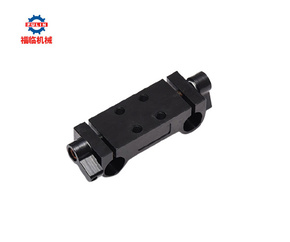
First, we need to understand the fundamental principles of high-precision grinding. High-precision grinding is a machining process that achieves stringent dimensional and geometric tolerances through abrasive machining. It relies primarily on grinding tools and abrasive materials to perform micron‑scale material removal from the workpiece surface, thereby eliminating surface defects and enhancing both precision and surface finish. This technology can effectively improve the dimensional accuracy, form accuracy, and surface quality of workpieces, thus boosting the overall performance of the finished product.
High-precision grinding technology plays an indispensable role in the machining of precision metal‑working components. First and foremost, it enables highly accurate dimensional control. By precisely regulating the position of the grinding tool and the cutting force, this technology can effectively remove surface contaminants and defects, ensuring that the workpiece meets its design specifications. This is especially critical for parts with stringent dimensional tolerances, such as components used in precision instruments.
Secondly, high-precision grinding technology can enhance the surface quality of components. During the grinding process, the abrasive tool performs minute material removal on the workpiece surface, eliminating burrs and protrusions to produce a smooth, even finish. This not only improves the aesthetic appearance of the part but also reduces friction and wear between the component and other parts, thereby extending its service life.
In addition, high-precision grinding technology can enhance the geometric accuracy of components. During the grinding process, the abrasive capability of the grinding tool can be precisely controlled, enabling the workpiece to meet its design specifications. For instance, in the manufacture of mechanical components, high-precision grinding can produce gear teeth with more uniform profiles, thereby improving transmission accuracy and efficiency.
In summary, high-precision grinding technology plays a crucial role in the machining of precision metal‑working components. It enables tight dimensional control, enhances surface quality, and improves form accuracy. By adopting high‑precision grinding, manufacturers can elevate product quality and performance, meeting market demand for highly accurate parts.
Tags:
Recommended News
Share to